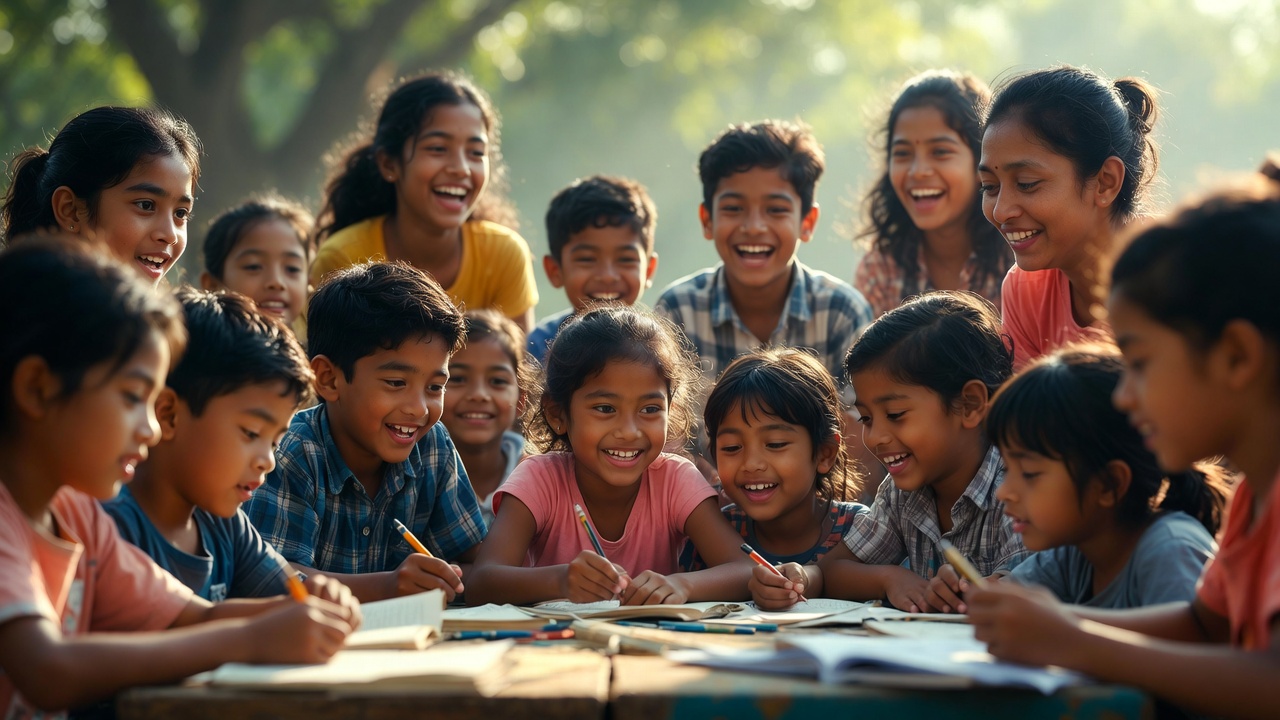
Learning doesn’t end when the bell rings.
It slips quietly into the streets, the parks, the kitchens, the neighborhood corners where curiosity never clocks out.
Children learn in the rhythm of their surroundings in the way a grandmother folds dough, in the patience of a bus driver, in the teamwork of picking up a dropped ball at the playground.
These are not lessons on paper. They are human blueprints that shape how a child understands effort, kindness, and belonging.
And for many families, that’s the real classroom not the one with desks, but the one with doors that never close.
The Neighborhood as a Living Textbook
Every block in a city carries its own syllabus.
Murals teach history, markets teach math, and street conversations teach empathy.
In these spaces, children don’t just memorize they absorb. They watch how adults greet each other, how differences coexist, how laughter travels between strangers.
It’s unstructured, but it’s real.
That’s the heart of community education: the belief that learning grows stronger when it’s shared, when it’s lived, not just taught.
And that shared rhythm is what keeps neighborhoods alive a constant exchange of what we know, what we’ve seen, and what we care enough to pass on.
Where Curiosity Finds Its Own Path
Inside classrooms, rules guide discovery.
Outside, discovery guides the rules.
When kids help plant vegetables in a community garden, they learn science through soil and patience.
When they help younger neighbors cross the street, they learn responsibility without ever being told the word.
These moments may not fit into standardized frameworks, but they build something formal education often misses a sense of ownership in learning.
Because when children see how their actions matter, learning stops being something they attend and starts becoming something they live.
Shared Meals, Shared Lessons
Community lunches, weekend cooking events, after-school projects they all carry a quiet power.
In those spaces, kids learn teamwork through serving others. They learn equality at the table, where everyone’s plate looks the same, and where conversation bridges the gap between “us” and “them.”
Food has always been a teacher. It reminds us that we all need the same things nourishment, patience, and time together.
For kids growing up in busy cities, these small, shared rituals are lessons in empathy that no textbook can deliver.
The Invisible Teachers
Behind every child’s curiosity, there’s a network of invisible teachers parents, neighbors, store clerks, coaches, volunteers.
They may never call what they do “education,” but their influence lingers in how a child sees the world.
They teach by example: showing what resilience looks like, what respect sounds like, what care feels like.
And when those lessons align with what schools teach, the result isn’t just knowledge — it’s confidence.
Education, at its best, isn’t a system. It’s a community in motion.
The Spin That Never Stops
When learning breaks out of classrooms, it becomes circular always returning, always reshaping itself.
Children teach parents. Parents inspire teachers. Neighbors become mentors without ever meaning to.
That’s what makes community education endless. It doesn’t follow semesters or grades; it follows life itself.
Every question sparks another, every act of help becomes a lesson someone will carry forward.
And maybe that’s the easy pull of learning not in the walls that contain it, but in the connections that keep it alive.
